
MFBF President joins leaders in Washington

WASHINGTON — Montana Farm Bureau Federation (MFBF) President Cyndi Johnson joined state Farm Bureau presidents from across the country in Washington, D.C., July 8–9 for the American Farm Bureau Federation (AFBF) Council of Presidents. The annual meeting brought agricultural leaders together with agency heads, policy advisers and economic experts to address national issues impacting rural communities.
"The Council of Presidents is a vital platform to ensure Montana's voice is heard directly by federal rule-makers," said Johnson. "From Supreme Court rulings to domestic energy and trade negotiations, the decisions being made right now in Washington will shape the future of our family farms and ranches."
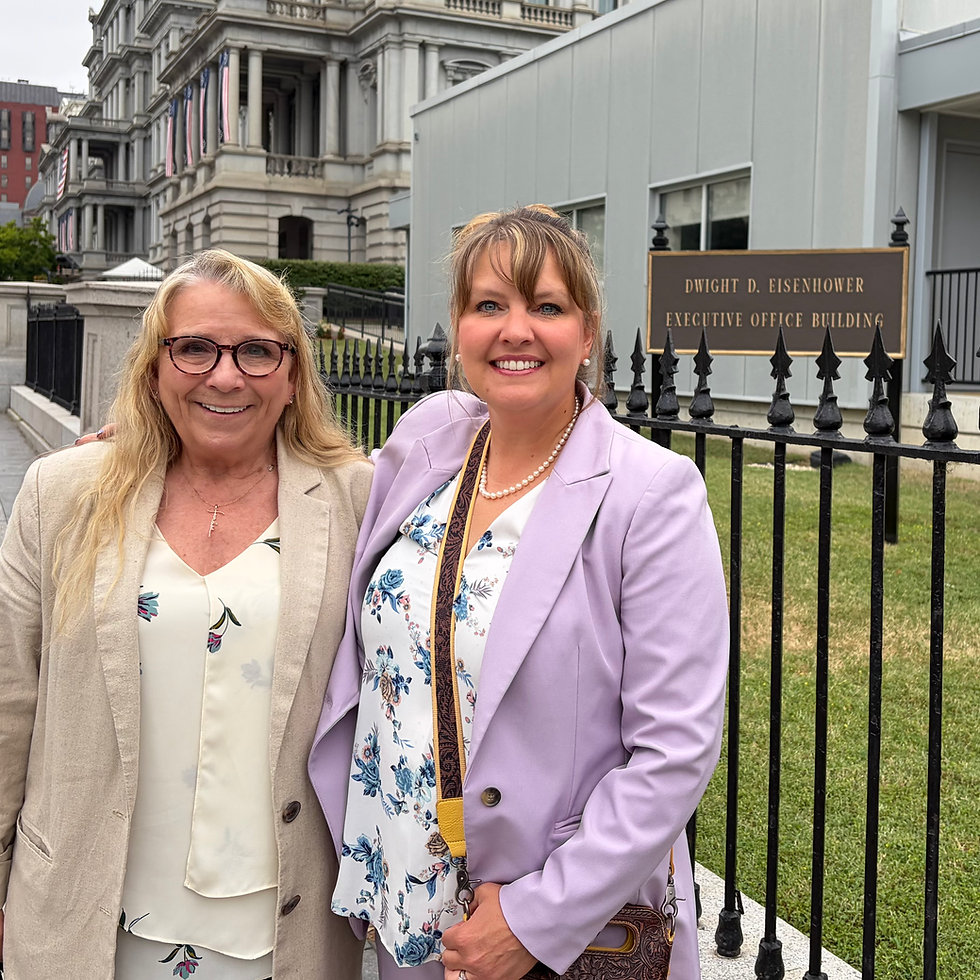
Discussions focused on federal regulatory environments, particularly following the Supreme Court’s landmark Chevron decision, which scales back the power of federal agencies to create rules without explicit congressional guidelines. Additionally, the presidents met with Environmental Protection Agency (EPA) Administrator Lee Zeldin at the Dwight D. Eisenhower Executive Office Building to discuss common-sense deregulation. A key highlight included potential rollbacks of Diesel Exhaust Fluid (DEF) requirements that currently cause large diesel engines to shut down mid-field or on highways during critical equipment transport.
In addition, the group heard from policy advisers who emphasized that while the United States-Mexico-Canada Agreement (USMCA) may be secure, upcoming tweaks are essential to ensure northern and southern trading partners strictly uphold their commitments.
 |  |  |
The agricultural leaders heard from United States Department of Agriculture’s Chief Economist Justin Benavidez and Deputy Secretary Stephen Vaden. They talked about the fertilizer industry, which has suffered due to past regulatory hurdles and the USDA’s recent announcement of $500 million for domestic fertilizer plants.
“That news is highly promising for the West,” said Johnson. “Montana has a shovel-ready plant in the eastern part of the state with secured private backing, poised to benefit from this infrastructure push.”
While year-round E15 fuel access remains a priority, experts noted that full nationwide implementation will take time due to current retail infrastructure limitations.
“We heard about the continued political focus on the ‘Make America Healthy Again’ (MAHA) movement,” said Johnson.
AFBF is actively working to share accurate information about production agriculture practices through its "Grow America Healthy Again" initiative. The initiative advocates for sound science in defining dietary guidelines—ensuring staples like yogurt are not misclassified as "ultra-processed"—and warns against a chaotic patchwork of conflicting state-level food regulations.
State presidents reached a strong consensus on the critical need for ag labor reform. Leaders are pushing for a streamlined system that allows standard agricultural workers to transition legally into an expanded, year-round H-2A program. This effort is strictly focused on creating a reliable workforce for farmers and ranchers through a legal and regulated pathway.
"Whether we are out on a tractor or checking cattle, our members need to share their stories and show how agriculture protects America's food security and health," Johnson concluded. "We must stand firm on sound science and support infrastructure development so Montana producers can continue to do what they do best: producing safe and affordable food."
In addition, Johnson and MFBF’s Senior Director of Governmental Affairs visited the offices of Representative Troy Downing and Senator Steve Daines where they discussed continuing work on the farm bill, the need for agricultural labor reform, economic disaster relief and support for the fertilizer plant in Culbertson.


Comments